Who it’s for
- Contractors and trades with work trucks, vans and trailers
- Businesses running a fleet of delivery, service or heavy vehicles
- Operators who need a CVOR certificate for trucks, buses or tow trucks
- Well-run fleets that want a broker who knows the business and reviews the policy with them
- Owners who drive a personal vehicle for work or have employees who do
What it covers
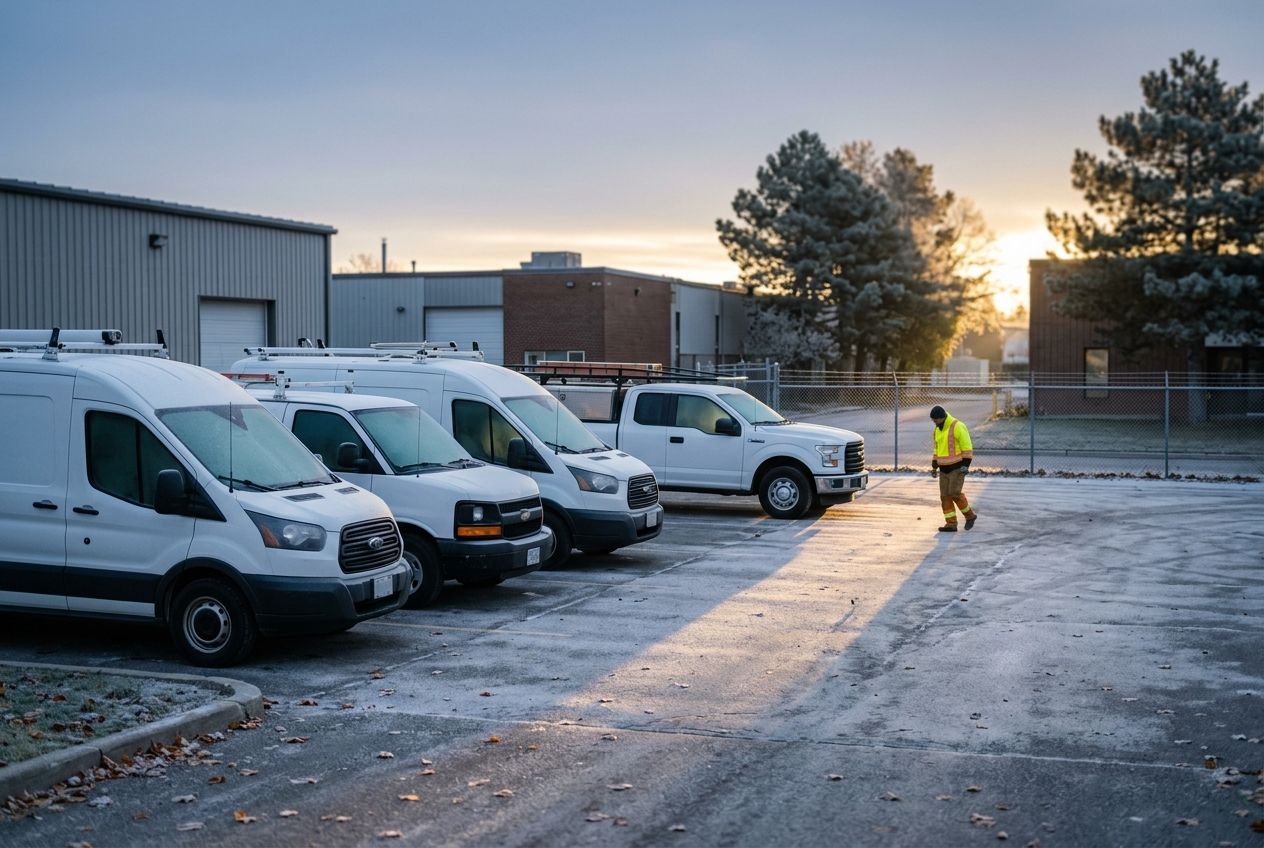
Commercial auto insurance covers vehicles your business owns, leases or uses for work. That might be one van for a plumbing business, a few pickups and trailers for a landscaping crew, or a fleet of straight trucks and tractor-trailers.
Like personal auto insurance, a commercial policy includes the coverages Ontario requires on every vehicle, such as third-party liability, which pays when your driver injures someone or damages their property. You can add physical damage coverage, which pays to repair or replace your own vehicles after a collision, theft, fire or vandalism.
What makes it commercial is everything around the vehicle: who drives it, what it carries, where it goes and how often. A commercial policy can list several drivers, cover trailers, and be built around how your business actually runs. Depending on the work, you may also need:
- Non-owned auto coverage: protects the business when employees drive their own vehicles on company business, or when you rent a vehicle.
- Cargo coverage: for goods you carry for customers, which your vehicle coverage doesn’t include.
- Higher liability limits: Ontario’s legal minimum is rarely enough for a business with vehicles on the road every day.
CVOR and heavier vehicles
In Ontario, you need a Commercial Vehicle Operator’s Registration (CVOR) certificate to operate trucks with a registered gross weight over 4,500 kg, buses that seat 10 or more passengers, and tow trucks, among others. Your CVOR record tracks collisions, convictions and roadside inspections. Insurers look at it closely, so a few bad months can follow a fleet into renewal.
What it doesn’t cover, and common gaps
- Tools and equipment in the vehicle. The auto policy covers the truck, not the generator, ladders or inventory inside it. Those belong on an equipment floater under your business policy.
- Drivers nobody told the insurer about. A new hire, a family member or a part-time driver who isn’t listed can turn a routine claim into a difficult one.
- Wrong use. A vehicle rated for commuting that’s actually making deliveries or visiting job sites is a problem waiting for a claim.
- Rented or borrowed vehicles. Without non-owned auto coverage, the business can be exposed when a rental or an employee’s car is involved.
What insurers look for in a well-run fleet
Underwriters reward fleets that can show they’re run carefully, and a good file can widen the choice of insurers at renewal. The things that matter most:
- Driver standards in writing: who’s allowed to drive, minimum experience, and what a driver’s record has to look like before they’re hired.
- Driver records checked regularly, not just at hiring, with a clear process when someone picks up a conviction.
- A clean, monitored CVOR record, reviewed through the year rather than at renewal.
- Maintenance records for every vehicle, and pre-trip inspections where they apply.
- Telematics or dash cameras, which more insurers now ask about and which help settle disputed claims.
Steve helps fleet owners put these together so the file tells an underwriter clearly how the business runs. It’s the same work whether the fleet has five vehicles or fifty.
Where your business and family policies overlap
This is where a lot of auto problems hide.
- A personal vehicle used for work. Say you run a small consulting firm and drive your own SUV to client sites with samples in the back. Your personal policy may be rated for commuting only. If the business use isn’t disclosed, you can have a hard conversation with your insurer after a claim.
- Company vehicles driven by family. If your teenager takes the company truck on weekends, they must be listed as a driver on that vehicle, not just on your personal policy.
- Who owns the vehicle. A truck registered to the company but insured personally, or the other way around, can cause problems. The registered owner, the insured and the actual use need to line up.
- Umbrella limits. A personal umbrella often requires certain liability limits on your personal vehicles and may not extend to company vehicles. A commercial umbrella may not cover your family cars. If the two don’t line up, there can be a gap right where a serious accident would land.
Steve checks who owns each vehicle, who it’s registered to, who drives it and what it’s used for, across both the business and the family policies.
How Steve works on this
Steve starts with how your vehicles are actually used, not just a list of VINs. He goes through the coverage summary with you before it’s finalized, points out where it falls short, and gives you options along with his own opinion on which way to go. Through Moller Insurance, he works with 13 auto insurers, so when one market isn’t a fit he can look at others. Before renewal, he reaches out to go over what’s changed (new drivers, new vehicles, new kinds of work) and reviews the driver list and CVOR record with you.
If you’d like a second set of eyes on your current auto policy, book a review.
Common questions
Do I need commercial auto insurance if I use my personal car for work?
Not always, but your insurer has to know how the vehicle is used. Driving to the office is different from visiting job sites, carrying tools or making deliveries, and the policy should be rated for the real use. If the business use is significant, or the vehicle is registered to the company, a commercial policy is usually the right fit.
Does a commercial auto policy need the vehicle to be in the company's name?
Usually the policy is in the name of whoever owns or leases the vehicle, so a company-owned vehicle is insured by the company. A vehicle you own personally but use commercially can be handled a few ways, and insurers differ on which they'll accept. What matters is that the registered owner, the name on the policy and the actual use all line up.
Does a company logo or vehicle wrap mean I need commercial auto insurance?
It can. Depending on the insurer, a vehicle wrapped with the company's decals or advertising may need commercial auto coverage, even if it's mostly driven like a personal car. Tell your broker before the wrap goes on.
What is Facility Association?
Facility Association is the insurer of last resort for Ontario drivers and businesses that can't find coverage in the regular market, usually because of claims, convictions or a difficult CVOR record. Fleets that put in steady work on their drivers and CVOR record can sometimes return to the standard market over time, but every insurer decides for itself.
What is a CVOR certificate?
CVOR stands for Commercial Vehicle Operator's Registration. In Ontario, you need one to operate trucks with a registered gross weight over 4,500 kg, buses that seat 10 or more passengers, and tow trucks, among others. Your CVOR record tracks collisions, convictions and inspections, and insurers look at it closely.
Are the tools and equipment in my truck covered by my auto policy?
Usually not. An auto policy covers the vehicle, not the contents you carry for your work. Tools and equipment are normally insured under a separate equipment or tool floater on your business policy.
What happens if an employee uses their own car for a business errand and has an accident?
The employee's own auto policy responds first, but if the claim is larger than their limits, the injured party can come after your business. Non-owned auto coverage is designed for that situation, and it's often missing from small business programs.