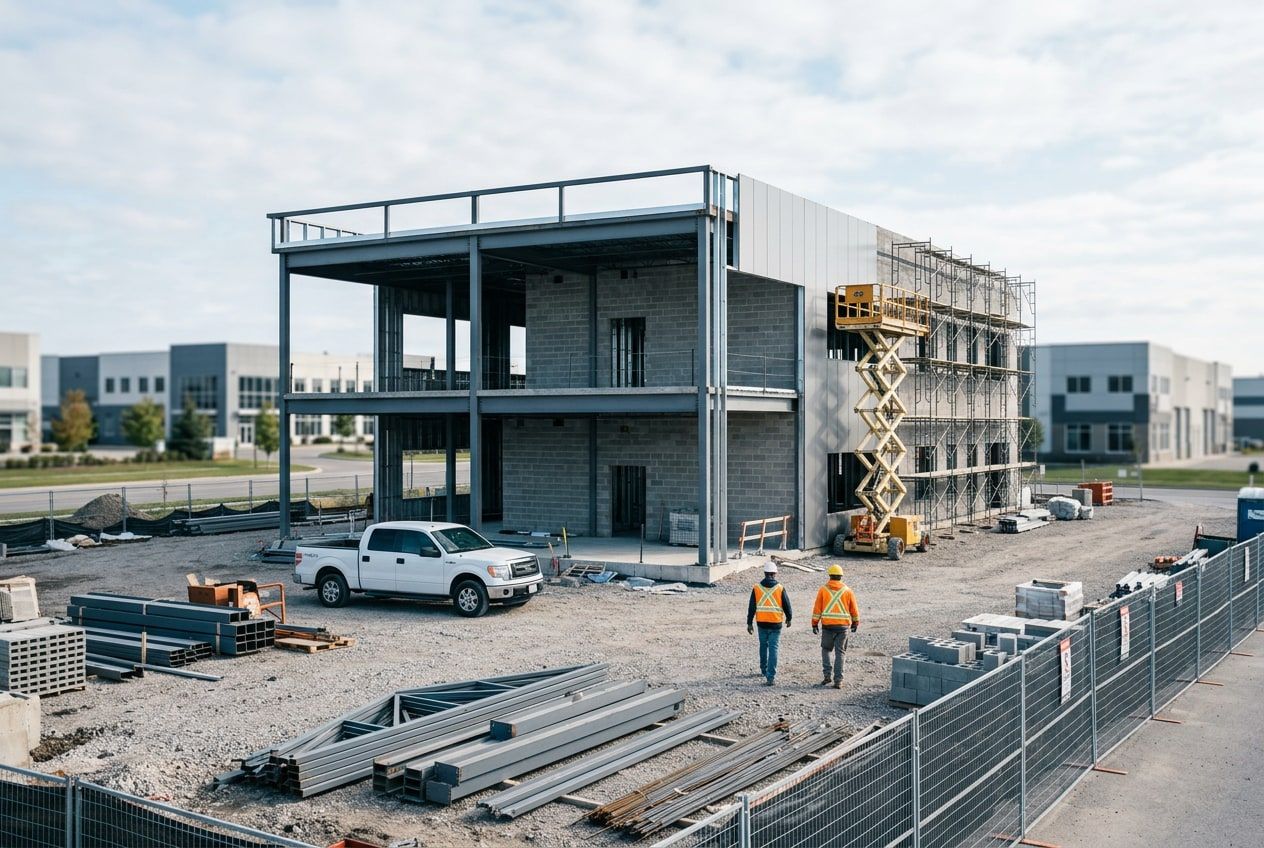
Who it’s for
- General contractors and builders, including those building custom or spec homes
- Trades whose contracts require them to insure the work
- Business owners putting up a new building, an addition or a major fit-out
- Holding companies and investors building commercial or multi-unit property
Contractors: what the contract asks for
Most of the time, whether you need builder’s risk comes down to the construction contract. Its insurance section usually says:
- Who buys the builder’s risk, the owner or the contractor.
- The limit, normally the full value of the work.
- Who must be named: the owner, the contractor, subcontractors and often the lender.
- Whether recovery is waived against the parties working on the project.
- What certificates you need to provide, and when.
Read it before you price the job. If the builder’s risk is yours, it’s a real cost that belongs in your bid, and the policy has to match what the contract says. Steve can review the insurance requirements with you before you sign.
Builders and spec homes
When you’re building a custom home for a client, the contract decides whether you or the owner carries the builder’s risk. When you’re building a spec home to sell, there’s no owner yet, so it’s yours. Either way:
- Put it in place before work starts, written for the completed value of the home.
- Get the names right: your company, the owner if there is one, and the lender.
- Plan for the end: what happens when the home is sold, handed over or occupied, so there’s no gap between your coverage and the buyer’s.
- Extend it if the build runs late. The policy runs for a set term.
Business owners building or expanding
Putting up a new building, adding onto the one you have or doing a major fit-out raises questions a contractor’s policy won’t answer for you:
- Delay costs. If a fire or flood pushes your opening back months, the extra interest, carrying costs and lost income or rent can be bigger than the physical damage. Soft costs and delay in start-up coverage can be added for exactly this.
- The existing building. If you’re adding onto an existing building, it usually has to be specifically included, and its own property policy needs to know about the work.
- Holding companies. If a holdco owns the land, the builder’s risk and later the property policy need to be in its name. See holding company property.
- Your lender will want to be listed, and may not release funds without proof. It isn’t automatic, so check.
- Moving in. Occupying or using the building usually ends the builder’s risk, so the commercial property policy should start that day.
How it fits with your other business insurance
Builder’s risk covers the project. It doesn’t replace:
- General liability, for injury or damage your business causes to others.
- Tools and equipment coverage for the gear that moves from site to site.
- Installation floaters for trades installing materials as part of someone else’s project. Steve’s article on installation floaters for subcontractors explains the difference.
- A wrap-up liability policy, on larger projects where the contract calls for one.
Many builder’s risk policies also require contractors, or at least key trades like framing, roofing, electrical and plumbing, to carry their own liability insurance before they start. Collect certificates before anyone is on site.
Where your business and family policies overlap
Contractors and business owners often build for themselves too. A contractor building their own family’s home needs the personal and business sides kept straight: who owns the house, who’s the builder, and which policy responds. Steve’s builder’s risk page for homeowners covers custom homes and major renovations from the family’s side.
For a plain-language breakdown of what’s inside a policy, including the conditions that decide claims, see What’s in a builder’s risk policy?
How Steve works on this
Steve starts with the contract and the project: who owns it, who’s building, the schedule and the finished value. He reviews what the contract requires, works out which policy fits, and makes sure your builder’s risk, liability, equipment and property policies line up with each other and with the contract. Then he plans the handover, so the right policy starts the day construction coverage stops.
If you’re bidding on a project or planning a build, talk to Steve before you sign the contract.
Common questions
Does a general contractor need builder's risk insurance?
Only if the contract makes the contractor responsible for it, or if they're building something they own, like a spec home. Many construction contracts set out who insures the project, the limit, who must be named, and whether recovery against the contractors is waived. Read the insurance section before you price the job, because the cost belongs in your bid.
Who is insured on a course of construction policy?
Often more than the person who buys it. Many course of construction policies insure the owner plus every contractor, subcontractor and consultant working on the site, and the insurer gives up its right to recover from them. That's why contracts often ask for it. It's worth confirming who's named on yours before work starts.
Is builder's risk the same as my general liability?
No. General liability covers injury or damage your business causes to other people and their property. Builder's risk insures the project itself, no matter what caused the loss. A contractor usually needs both, plus coverage for tools and equipment.
What are soft costs and delay in start-up?
They're the money you lose when a covered loss pushes back completion, not the cost of the damage itself: extra interest on the construction loan, taxes, extended fees, and rent or income you would have earned if the building had opened on time. They're usually optional on builder's risk policies and often have a waiting period, but for a commercial building they can be bigger than the physical loss.
Does builder's risk cover my tools and equipment?
Generally not. Contractors' tools, equipment and machinery are usually excluded from builder's risk. They need their own tools and equipment, or contractor's equipment, coverage that follows them from site to site.
What is a wrap-up liability policy?
A wrap-up is a liability policy written for one construction project that covers the owner and all the contractors working on it, instead of each relying on its own general liability. Some builder's risk policies accept a wrap-up in place of each trade's own liability certificate. Whether you need one depends on the size of the project and what the contract asks for.
When does commercial builder's risk end?
Usually at the end of the policy term, at completion, or when the building is occupied or put to use, whichever comes first. Many policies also restrict coverage if work stops or the site is left unattended for a set period. If the project runs long, extend the policy before it expires, and have the building's regular property policy ready to start the day you move in.