Who it’s for
- Families building a custom home, or tearing down and rebuilding
- Homeowners doing a major renovation, especially one that means moving out
- Business owners building through a holding company, or putting up a new commercial building
- Contractors and builders who carry the builder's risk on the homes they build
- Real estate investors renovating a rental between tenants
What builder’s risk covers
A builder’s risk policy insures a building while it’s going up or being substantially renovated:
- The structure itself, as it’s built, up to its completed value.
- Materials and supplies that will become part of the building. Some policies also cover them in transit or in storage off site; many renovation policies cover them only at the site.
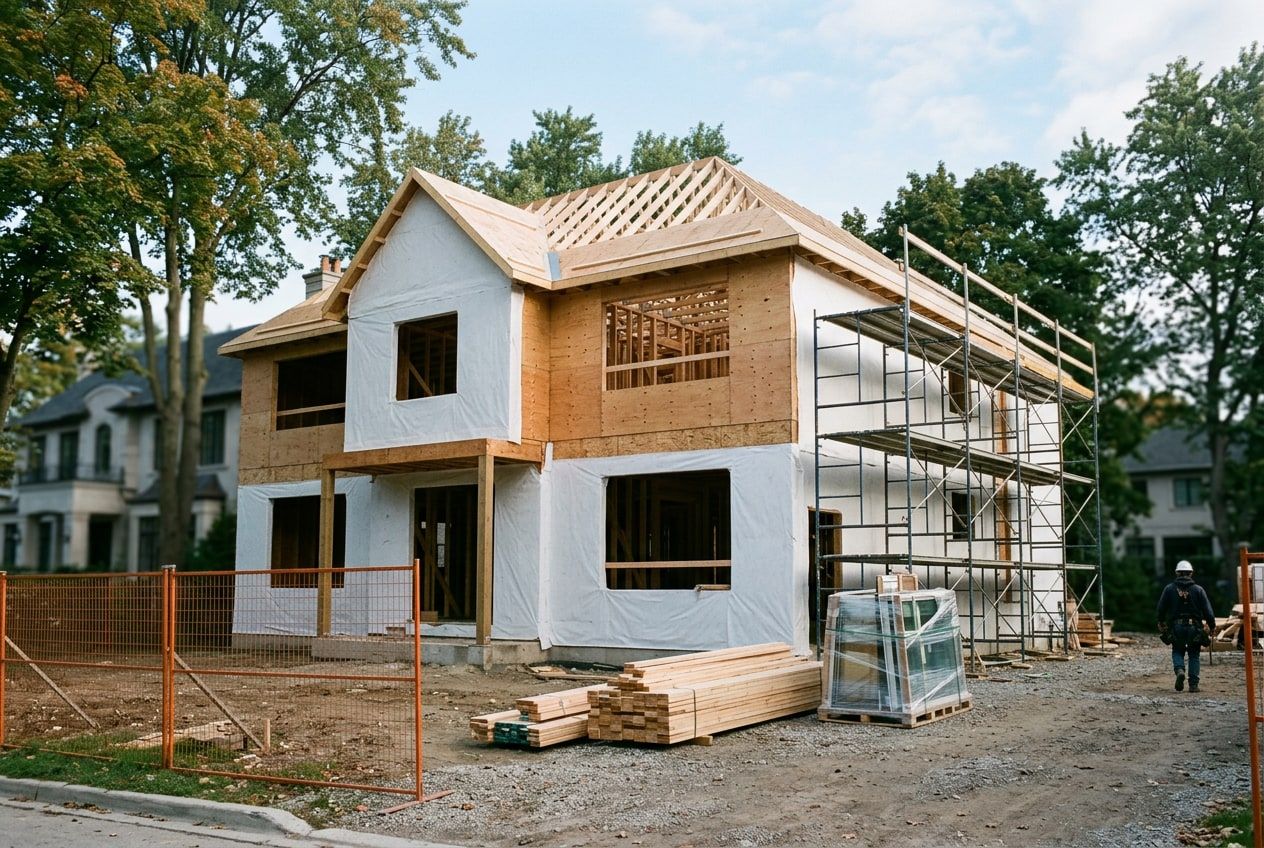
- Fire, wind, theft and vandalism. A house with no windows, no alarm and a pile of lumber in the garage is an easy target.
- Often liability for the owner, included or as an option. If a neighbour’s child wanders onto the site, falls and is hurt, and the parents sue you, you need a policy that responds and defends you.
It doesn’t cover the contractors’ tools and equipment, and it generally doesn’t pay to redo poor workmanship.
Builder’s risk vs. your contractor’s insurance
This is the most common mix-up Steve sees. A homeowner asks the contractor whether they’re insured, the contractor says yes, and everyone assumes the house is covered. Usually what the contractor has is general liability, and that’s a different thing.
- The contractor’s general liability responds when the contractor causes the damage and is sued: a tool malfunctions and burns the house down, or a plumber installs a faulty fitting that floods the second floor.
- Builder’s risk insures the house itself, from the tear-out to the finished project, no matter what caused the loss. If the house burns down at 80% complete and it wasn’t the contractor’s fault, the contractor’s general liability won’t respond. That’s what builder’s risk is for.
Even when the contractor is at fault, your home or builder’s risk policy is usually the first line of defence. It’s written for the completed value, because there’s no practical way to insure a house at each stage as it’s built. And it costs more than home insurance because of the risk: a house under construction is often empty, open to the weather and full of materials.
Building a custom home
A custom home is one of the biggest things a family will ever pay for, and it’s at its most exposed while it’s being built. Steve has worked with many clients through custom builds, and the same questions come up every time:
- Who’s buying the builder’s risk? The construction contract should answer this. If it’s you, the policy should be in place before the first shovel goes in the ground.
- What’s it insured for? The completed value of the home, including the finishes you’ve chosen, not the value on the day the policy starts.
- Whose names are on it? If the lot is owned by you and your spouse, a holding company or a trust, the policy needs to match. Your lender will usually want to be listed and may not release the next draw without proof. It isn’t automatic, so check.
- How long will it take? The policy runs for a set term. If the build runs late, it has to be extended before it expires.
- What happens at the end? Coverage often ends when the home is complete or occupied. Steve lines up the home policy to start the day the builder’s risk stops.
Major renovations
Not every renovation needs builder’s risk. Repainting, a new kitchen or a finished basement are usually fine under your home policy, as long as the insurer knows about the work.
A substantial renovation is different. If the roof is coming off, walls are being opened up, an addition is going on, or the family is moving out during the work, your home policy may restrict coverage, and some insurers want a builder’s risk or renovation policy in place instead.
The rule that doesn’t change: tell your insurer before the work starts. Steve will find out what your policy allows and set up what’s needed for the length of the project.
What’s in the policy
There are two main kinds of builder’s risk policy. A course of construction policy insures a new build at its completed value and often covers the contractors too. A renovation or vacancy policy insures an existing house during the work, usually with stricter conditions like regular site checks and keeping the heat on. Both come with exclusions and conditions that can decide whether a claim is paid.
Steve’s guide, What’s in a builder’s risk policy? Coverage, exclusions and conditions explained, compares the two side by side and lists the questions to ask before work starts.
For contractors and builders
Steve insures contractors, and some of them build custom homes. When the contract puts the builder’s risk on the builder, it sits alongside the business’s general liability and tools coverage. See builder’s risk for contractors and commercial projects.
Where your business and family policies overlap
- Building through a company. If your holding company owns the lot, the builder’s risk and later the property policy need to be in the company’s name. See holding company property.
- The contractor building their own house. Keep the personal and business sides straight: who owns the house, who’s the builder, and which policy responds.
- A home office or workshop in the new house. The home policy should know about it from day one.
- Your umbrella during construction. Make sure it knows about the project.
- The rental between tenants. Renovating an empty rental can run into vacancy limits on the landlord policy.
How Steve works on this
Steve starts with the contract and the plans: who owns the land, who’s building, how long the work will take and what the finished home will be worth. He works out which kind of policy fits, walks you through what it covers and the conditions you’ll need to meet, sets the right names and limits, and plans the handover so the home policy starts the day construction coverage stops.
If you’re planning a build or a big renovation, talk to Steve before the work starts. It’s much easier to get right at the beginning.
Common questions
What does builder's risk insurance cover?
It covers the building under construction and the materials and supplies that will become part of it against damage from things like fire, wind, theft and vandalism. Many course of construction policies also cover materials in transit or in storage, up to a set amount, and temporary works like scaffolding. Owner's liability is often available too. Exactly what's included and what conditions apply varies a lot by policy.
Who buys builder's risk, the owner or the contractor?
Either one can. The construction contract should say who's responsible for it. On renovations it's most often the homeowner. On custom builds it may be the owner or the builder. What matters is that someone does, that it's in the right names, and that both of you know which it is.
Does my home insurance cover a renovation?
Some renovation work is fine to do under a home policy, as long as the insurer knows about it. A major renovation often isn't: if walls are opened up, the roof is off or the house is empty while the work happens, the home policy may restrict coverage. Tell your insurer before the work starts. A builder's risk policy may be needed alongside or instead.
My contractor says they have insurance. Isn't that builder's risk?
Usually not. What most contractors carry is general liability, which covers injury or damage they cause and are sued for. Builder's risk insures the house itself while it's being built or renovated. If your contractor has bought a builder's risk policy for your project, that's great, but ask to see it. In most renovations, it's the homeowner who buys it.
What's the difference between builder's risk and the contractor's general liability?
The contractor's general liability responds when the contractor causes the damage, for example a tool malfunctions and starts a fire, or a plumber installs a faulty fitting that floods the second floor. Builder's risk covers the house no matter who caused the loss. If the house burns down or has serious water damage that wasn't the contractor's fault when it's 80% complete, the contractor's general liability won't respond. That's what builder's risk is for.
If my contractor causes the damage, whose insurance pays?
Your home or builder's risk policy is usually the first line of defence and typically pays the claim. What happens next depends on the policy. Under a home or renovation policy, your insurer may then recover what it paid from the contractor's insurer if the contractor was at fault. Under many course of construction policies, the contractors and subcontractors are insured on the same policy, so the insurer gives up that right against them and may only pursue designers or outside parties.
Does builder's risk include liability coverage?
Often, but not always, and it varies. Many owner's packages include liability, or offer it as an option. That matters: if a neighbour's child wanders onto the site, falls and is seriously hurt, and the parents sue you as the property owner, you need a policy that will respond and defend you. Some owner's liability sections cover only your ownership of the site and exclude claims arising from the construction work itself, which is why your contractors' own liability insurance matters so much.
Why does builder's risk cost more than home insurance?
Because of the type of risk. A house under construction is often empty, open to the weather and full of materials, and coverage for a vacant home is expensive on its own. Add a major renovation of a large older home that will be fully custom when it's done, and the premium reflects all of that.