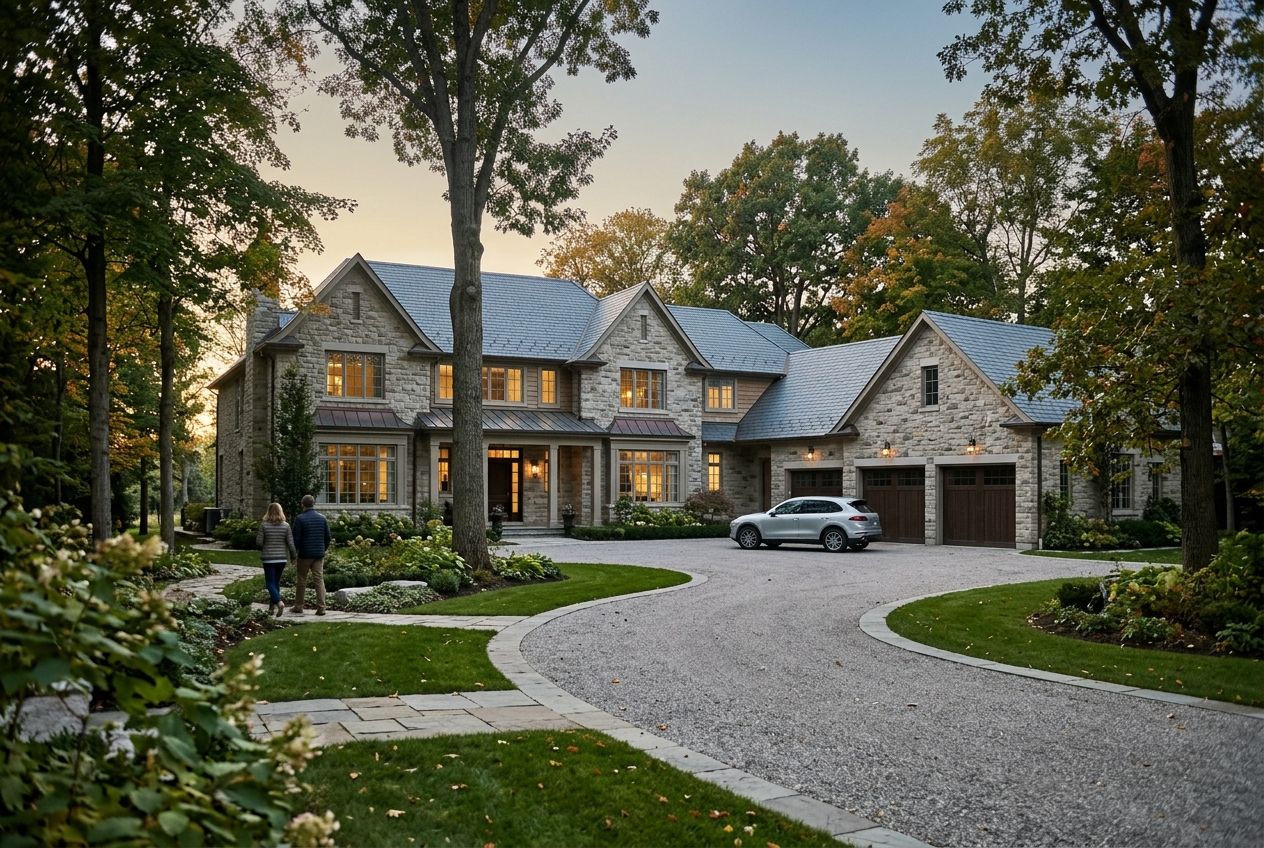
Who it’s for
- Owners of custom, luxury or architecturally unusual homes
- Families who want the home, cottage, cars and valuables looked after by one broker
- Older homes with plaster, slate, millwork or heritage features that cost more to rebuild
- Households with jewellery, art, watches, wine or collections
- Business owners who work from home or keep business equipment or inventory there
- Homes owned through a holding company or a family trust
- Anyone planning a major renovation or an extended trip away
High-value home insurers Steve works with
Larger and custom homes are often placed with insurers that run dedicated high-value home programs, built around higher rebuild costs, valuables and the risk advice that goes with them. Through Moller Insurance, Steve places business with programs including:



Why a high-value home is insured differently
A standard home policy is written for a standard home. Once a house is larger, custom built, older with quality materials, or full of things worth more than the policy’s built-in limits, the standard wording starts to leave gaps. Insurers know this, so they underwrite higher-value homes more the way they look at a commercial building: construction, rebuild cost, protection, how it’s used and who lives there.
That means the application matters more, and so does reading the policy you get back.
High net worth and private client programs
Whether it’s called luxury, high net worth or private client insurance, the idea is the same. A handful of insurers run dedicated programs for higher-value homes and the families who own them. Steve works with three of them: Aviva Ovation, Chubb and Intact Prestige.
These programs are generally written more broadly than a standard home policy, with higher limits for valuables and more attention to how a large home is actually rebuilt. Some can also bring the main home, a cottage and collections together under one program, and with Aviva and Intact the family’s vehicles can be placed with the same insurer. They differ in what they’ll insure and how they word it, so the right fit depends on the home, what’s in it and how the family uses it.
Homes in Oakville, Burlington and Halton
Most of Steve’s high-value clients live in Oakville, Burlington and the rest of Halton Region, and many also have a cottage in Muskoka. The homes vary, and so do the questions insurers ask:
- Lakefront homes along Lake Ontario, where wind, water and the shoreline come up in underwriting.
- Older homes in south Oakville and downtown Burlington, with plaster, slate roofs, millwork and heritage details that cost more to rebuild than a new house.
- New custom builds and major renovations, which need builder’s risk during construction and the right home policy the day the family moves in.
- Estate properties in north Oakville, Milton and Halton Hills, with acreage, pools, outbuildings or a long distance to the nearest hydrant.
Your home and cottage together
Many high-value clients also own a cottage, often in Muskoka. When the home and cottage are with different insurers or brokers, the limits, deductibles and liability rarely line up, and the umbrella may not sit over both. Steve looks at the two together, whether they end up on one program or two.
Replacement cost is not market value
The number that matters is what it would cost to rebuild your home after a total loss, using similar materials and quality. That’s different from what the house would sell for. On a custom home in Oakville or Burlington, the rebuild cost can be well above or well below the market value, depending on the lot and the build.
For larger or unusual homes, insurers may ask for a professional appraisal or send someone to inspect. It’s worth doing: an underinsured home is the problem nobody notices until a fire.
Guaranteed replacement cost is policy wording where the insurer agrees to pay the full cost to rebuild after a covered loss, even if that’s more than your dwelling limit. It isn’t a blank cheque. It usually depends on insuring to the value the insurer sets and reporting renovations, and some insurers offer a capped version instead (for example, a percentage above your limit). Also ask how the policy handles bylaw and building code upgrades, which can add real cost to a rebuild.
Valuables: jewellery, art, wine and collections
Most home policies have special limits for theft of jewellery, watches, furs, silverware, coins, stamps and collections. Those limits are often far below what people actually own. Items worth more should be scheduled (listed individually), usually with an appraisal or receipt, and the appraisals should be updated every few years.
Art and wine raise their own questions. Is the collection valued at what you paid or what it’s worth now? Is a climate-controlled wine cellar covered if the power goes out? Is breakage covered? These answers vary by insurer, so they’re worth asking before you need them.
Water damage and sewer backup
Water is one of the most common reasons for home claims, and in a large home with finished basements and high-end finishes, one leak can be expensive. Check three things:
- Sewer backup: usually an add-on, with its own limit.
- Overland water: surface flooding, usually a separate add-on.
- Conditions: some insurers ask about backwater valves, sump pumps, or automatic water shut-off devices on larger homes.
Alarms, renovations and vacancy
Monitored alarms (burglary, fire, low temperature, water) matter to insurers on high-value homes, and some may ask for them. Tell your insurer before a major renovation. Open walls, contractors and a house that isn’t lived in all change the risk. Most home policies also limit coverage if the home is vacant or unoccupied for an extended stretch, so a long winter away or a gap between moving out and moving in needs a call first.
Where your home and business policies overlap
This is where things most often go wrong for business owners:
- Home office and equipment. A home policy covers business property only to a small limit, and business inventory often not at all.
- Clients or staff at the house. A client who slips on your front steps during a meeting may not be covered under your personal liability if the home policy doesn’t know about the business.
- People working on site. Housekeepers, nannies, landscapers and contractors raise liability questions that should be talked through.
- Home owned through a holding company or trust. The owner on title must match the named insured on the policy, and some home policies aren’t designed for a corporate owner at all.
Steve checks who is on title against who is on the policy, what business property is at the home, whether your business liability policy extends to work done there, and whether your umbrella sits over both.
How Steve works on this
Most of Steve’s high-value clients come by referral, and most of them are looking for one thing: a broker who stays on top of the file. He places business with more than 20 insurers, so he can look at different wordings for an unusual home. And he reaches out before renewal to ask what has changed: renovations, new valuables, a new business, a family member moving home.
If your home has changed since the policy was written, a review is a good place to start.
Common questions
What's the difference between high-value, high net worth and private client home insurance?
Mostly they're different names for the same thing: home insurance written for higher-value homes and the people who own them. "Private client" usually means an insurer's dedicated program for these clients, which can bring the home, cottage and valuables together. Which program fits depends on the home and what's in it, so it's worth comparing the wordings.
Can my home and cottage be on the same policy?
Sometimes. Some high-value programs can put your main home, cottage and other properties on one policy; others keep them separate. Either way, the limits, deductibles and liability should line up so there's no gap between them, and your umbrella should sit over all of it.
Is my home insured for what I paid for it?
Usually not, and it shouldn't be. Your dwelling limit should reflect what it would cost to rebuild the house, not its market value, which includes the land. On custom homes the two numbers can be far apart in either direction, so the limit needs to be worked out properly.
What is guaranteed replacement cost?
It's policy wording where the insurer agrees to pay the full cost to rebuild your home after a covered loss, even if that's more than your dwelling limit. It comes with conditions, usually that you insure to the value the insurer calculates and tell them about renovations. Not every insurer offers it on every home, and some cap the extra amount instead, so read the actual wording.
Is my jewellery covered under my home policy?
Partly. Most home policies have a fairly low limit for theft of jewellery, watches and similar items. If yours are worth more than that limit, they should be listed individually on the policy, usually with a recent appraisal or receipt.
Does home insurance cover sewer backup and flooding?
Not automatically. Sewer backup is usually an add-on, and overland water (surface flooding) is a separate add-on again. Limits vary, and some insurers ask about backwater valves, sump pumps or water shut-off devices on larger homes.
Do I need to tell my insurer before I renovate?
Yes. A renovation changes the risk: contractors on site, open walls, and often a period when the home isn't lived in. Many policies limit coverage during major work or vacancy, so call before work starts, not after.
Does my home policy cover my home office and business equipment?
Only to a small limit, and often not at all for inventory or for business liability. If you run any part of your business from home, that needs to be added to the home policy or covered under your business policy.