Who it’s for
- Families with cottages anywhere in Muskoka, from the big lakes to smaller lakes, rivers and back-lake properties
- Owners of high-value waterfront cottages that need more than a standard cottage policy
- Owners of boathouses, including boathouses with living space, bunkies and guest cottages
- Water-access-only and island properties
- Cottages owned through a corporation, a family trust, or shared among siblings
- Families building a new cottage or renovating an old one
- GTA and Halton families who want one broker for the house in town and the cottage
High-value programs for larger cottages
A large waterfront cottage is often insured on the same high-value program as the family’s home, or on that insurer’s cottage policy, so the limits and liability line up. Through Moller Insurance, Steve places business with programs including:



What makes a Muskoka cottage different to insure
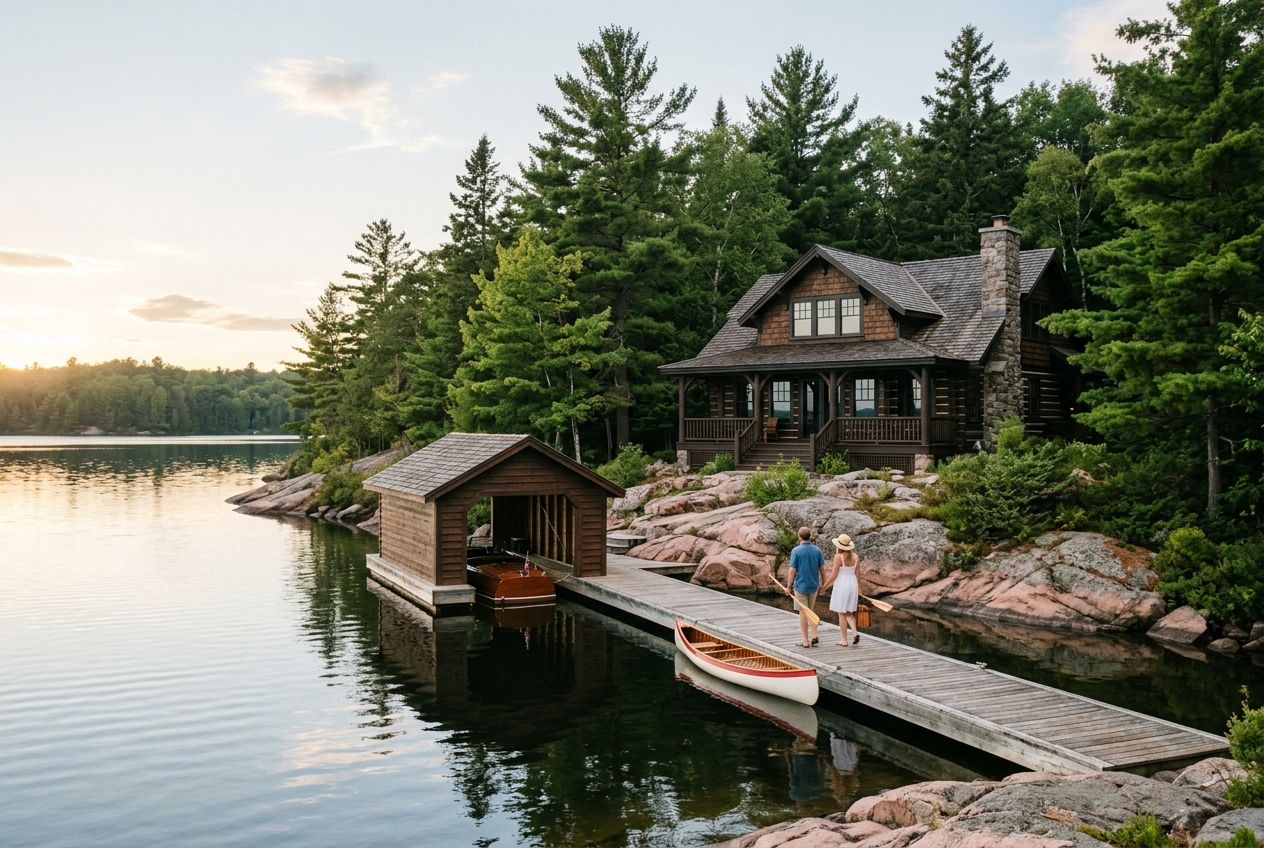
A cottage isn’t just a second house. It’s on the water, often far from a fire hall, empty for parts of the year, heated with a wood stove, and full of boats and toys. Each of those details changes how an insurer looks at the property. Steve is based in Burlington and Oakville and works with cottage owners from the GTA and Halton who own on Lake Muskoka, Lake Rosseau and Lake Joseph, around Port Carling and across the Township of Muskoka Lakes, and in Lake of Bays, Huntsville, Bracebridge, Gravenhurst and Georgian Bay township.
High-value cottages
Many Muskoka cottages today are large, year-round homes on the water, with custom finishes, a boathouse with a suite, a bunkie or guest cottage, and a family’s worth of boats. Insurers look at these the way they look at a high-value home in the city:
- Rebuild cost, not market value. Rebuilding on the water, especially on an island or water-access lot, can cost far more than the same house in town. The limit should reflect what it would actually take.
- Every building on the property. The main cottage, boathouse, bunkie, guest cottage and sheds each need to be listed at the right value.
- What’s inside. Art, wine, furnishings and collections at the cottage need the same attention as at home.
- How the family uses it. Year-round or seasonal, who checks on it, and who uses the boats.
For these cottages, the same private client programs and enhanced policies that insure a large home are often the right fit. Steve’s guide to high-value home insurers explains how they work. Depending on the insurer and the property, the cottage may go on the same program as the home or on a separate cottage policy.
Waterfront, docks and boathouses
Docks, boat lifts and boathouses take a beating from ice and storms. Ask how your policy treats them: some insurers limit coverage for docks, exclude certain ice damage, or apply a separate deductible.
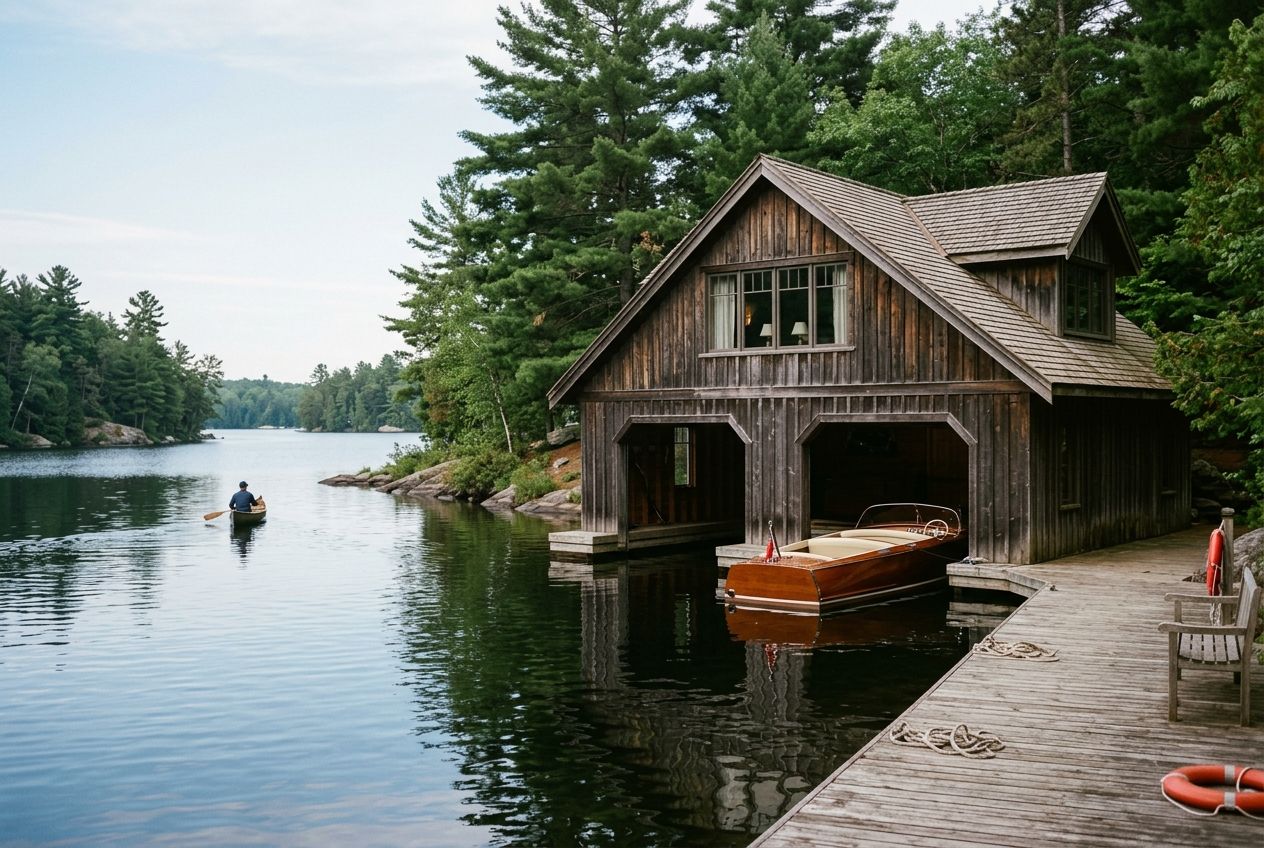
Boathouses are often worth more than people think, especially the larger two-storey boathouses found on the big lakes like Rosseau, Joseph and Lake Muskoka. If yours has a bedroom, kitchen or bathroom, the insurer needs to know. It may be treated as a separate dwelling, and it changes the liability picture if guests sleep there.
Seasonal use, winter checks and vacancy
Most cottage policies set conditions for when the property is unoccupied. Common ones are heat kept on, water shut off and lines drained, or regular checks by someone you’ve arranged. If a pipe freezes in February, the claim may come down to whether those conditions were met. Know what your policy says, and if a neighbour or property manager does your checks, keep a simple log.
Building a new cottage or doing a major renovation is different again: the cottage policy usually isn’t written for a building site. See builder’s risk insurance for building or renovating a cottage.
Wood stoves and WETT inspections
Wood stoves and fireplaces are standard at the cottage, and insurers ask about them every time. Many will want an inspection by a WETT-certified inspector, particularly after a new installation or a change. Keep the report. Tell your insurer about any new stove before you light it.
Fire protection and water-access properties
Insurers classify a property by its distance from the nearest fire hall that responds, and whether there’s a hydrant or other water supply nearby. Many Muskoka cottages are well outside town fire protection, and island or water-access-only properties are the hardest to protect. That doesn’t make them uninsurable, but it narrows the list of insurers and affects the terms. Monitored fire alarms and good access for emergency crews help the conversation.
Boats and watercraft
Boats, personal watercraft and their trailers can sometimes be added to a cottage policy and sometimes need their own. Larger or faster boats usually need a separate policy. If guests use your boats, canoes or paddleboards, ask how liability works, because some policies limit coverage when watercraft are lent out.
If you rent the cottage out
If the cottage is rented, even for a few weeks a year, the insurer has to know before the first guest arrives. Many cottage policies limit or exclude coverage when the property is rented, and booking platforms’ host protection doesn’t replace your own policy. In the Township of Muskoka Lakes, rentals of 28 days or less need a licence under By-law 2025-049, which requires proof of at least $2,000,000 in liability insurance that identifies the rental use; the licence is suspended if the insurance lapses. Other Muskoka municipalities have their own rules.
Personal, corporate, trust or family ownership
Who owns the cottage changes who should be on the policy. If it’s held through a corporation, the corporation needs to be the named insured, and the family members who use it need to be covered for liability. If it’s in a family trust or owned by siblings, every owner on title should be on the policy, and someone needs to own the job of keeping it up to date.
Where your business and family policies overlap
The cottage often sits in the gap between business and family insurance. Steve checks:
- that the named insured on the cottage policy matches title, whether that’s you, a holding company or a family trust
- that the home and cottage limits, deductibles and liability line up, whether they’re with one insurer or two
- that your umbrella covers the cottage, the boats and everyone who uses them
- that a company truck or equipment kept at the cottage is insured on the right policy
- that any business use of the cottage (staff retreats, client visits) is disclosed
How Steve works on this
Steve goes through the cottage coverage summary with you, including what it won’t cover: the vacancy conditions, the boathouse, the dock, the boats. He explains the shortcomings, gives you options from more than 20 insurers, and tells you what he’d do. He looks at the cottage and the home together, so nothing falls between them. Before each renewal he reaches out to ask what changed: a new boat, a new stove, a renovation, a change in ownership.
If you’ve bought, built or changed a cottage since your last review, it’s worth a look before next season.
Common questions
Can my cottage be insured with my high-value home?
Often, yes. Some high-value programs can include a cottage with the main home; others insure it on a separate cottage policy with the same insurer. Either way, the point is that the limits, deductibles and liability line up, and your umbrella sits over both.
Is my boathouse covered under my cottage policy?
Usually it can be, but it has to be listed with the right value, and boathouses with living space or a second-storey suite are often treated as their own building. Docks and boat lifts may have separate limits or conditions. Ask how ice and storm damage to docks are handled.
Are my boats covered by my cottage policy?
Small boats, canoes and paddleboards can sometimes be included, up to a limit. Larger or faster boats and personal watercraft usually need their own policy. Make sure the liability for the boats lines up with your umbrella.
Do I need a WETT inspection for my wood stove?
Most insurers want to know a wood stove or fireplace was installed and checked properly, and many ask for an inspection by a WETT-certified inspector. If you've added or replaced a stove, expect the question. Get the inspection report and keep it with your policy papers.
Why does distance from a fire hall or hydrant matter?
Insurers classify a property by how quickly a fire department can get there and whether there's water to fight a fire. A cottage far from a fire hall, without hydrants, or reachable only by water is a higher risk, which affects which insurers will write it and on what terms.
Does my cottage need to be checked over the winter?
Most cottage policies have conditions for when the property is unoccupied, such as heat maintained, water shut off and drained, or regular checks by someone. Read those conditions closely, because a frozen-pipe claim can turn on whether they were followed.
What if I rent the cottage out occasionally?
Tell the insurer before the first guest arrives. Many cottage policies limit or exclude coverage when the property is rented, and a claim on an undisclosed rental can be denied. In the Township of Muskoka Lakes, rentals of 28 days or less also need a licence, which requires proof of at least $2,000,000 in liability insurance that identifies the rental use.
Should the cottage be owned personally or through my company?
That's a tax and estate question for your accountant and lawyer. The insurance question is making sure the policy matches whoever is actually on title, and that everyone in the family who uses the cottage is properly covered for liability.